
Last updated November 21, 2026
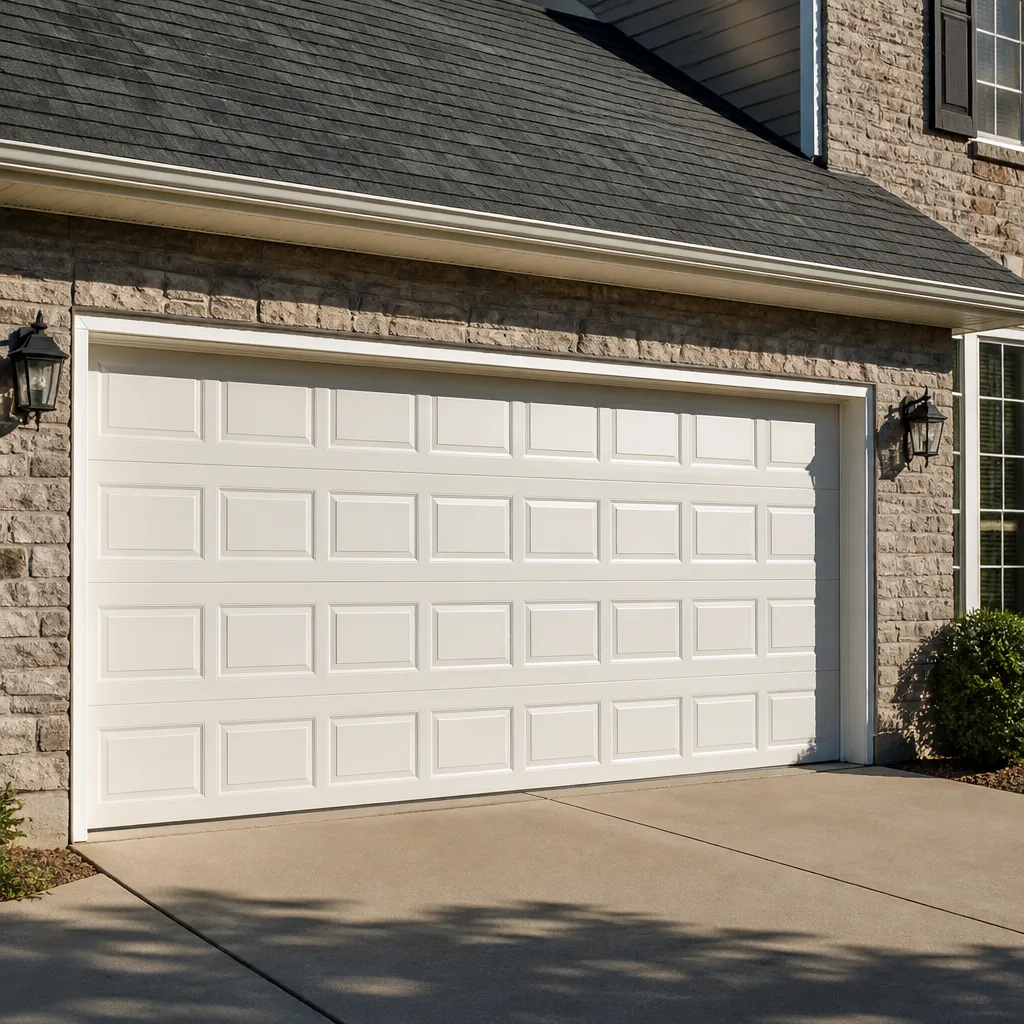 Raised-panel steel
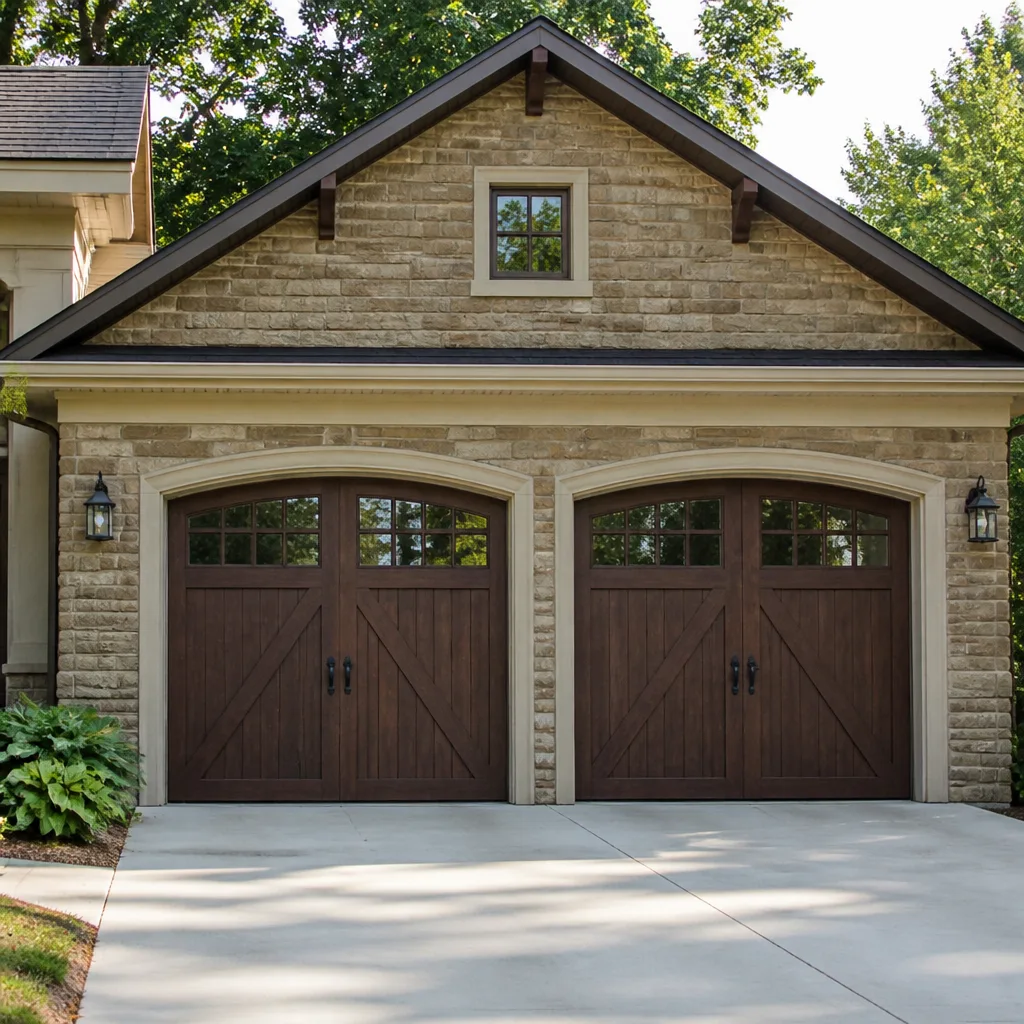 Carriage house
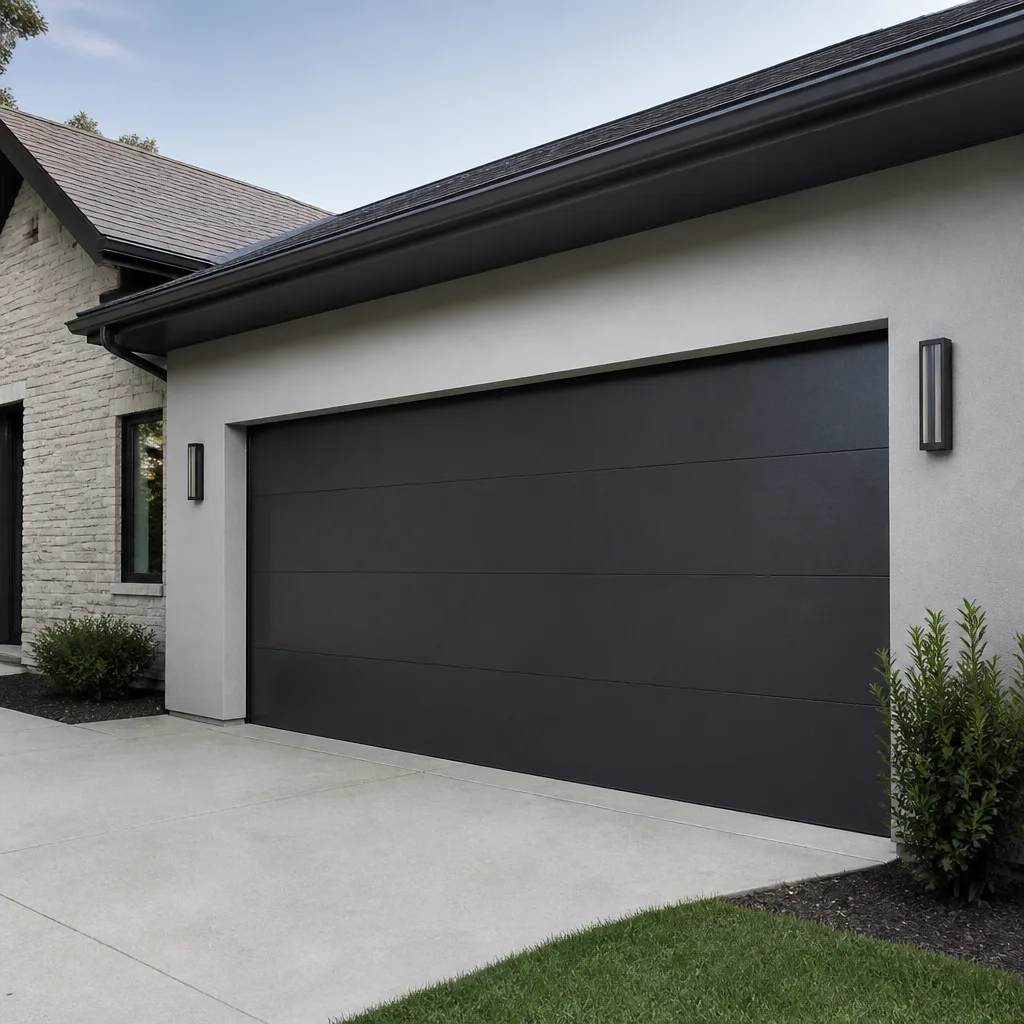 Modern flush
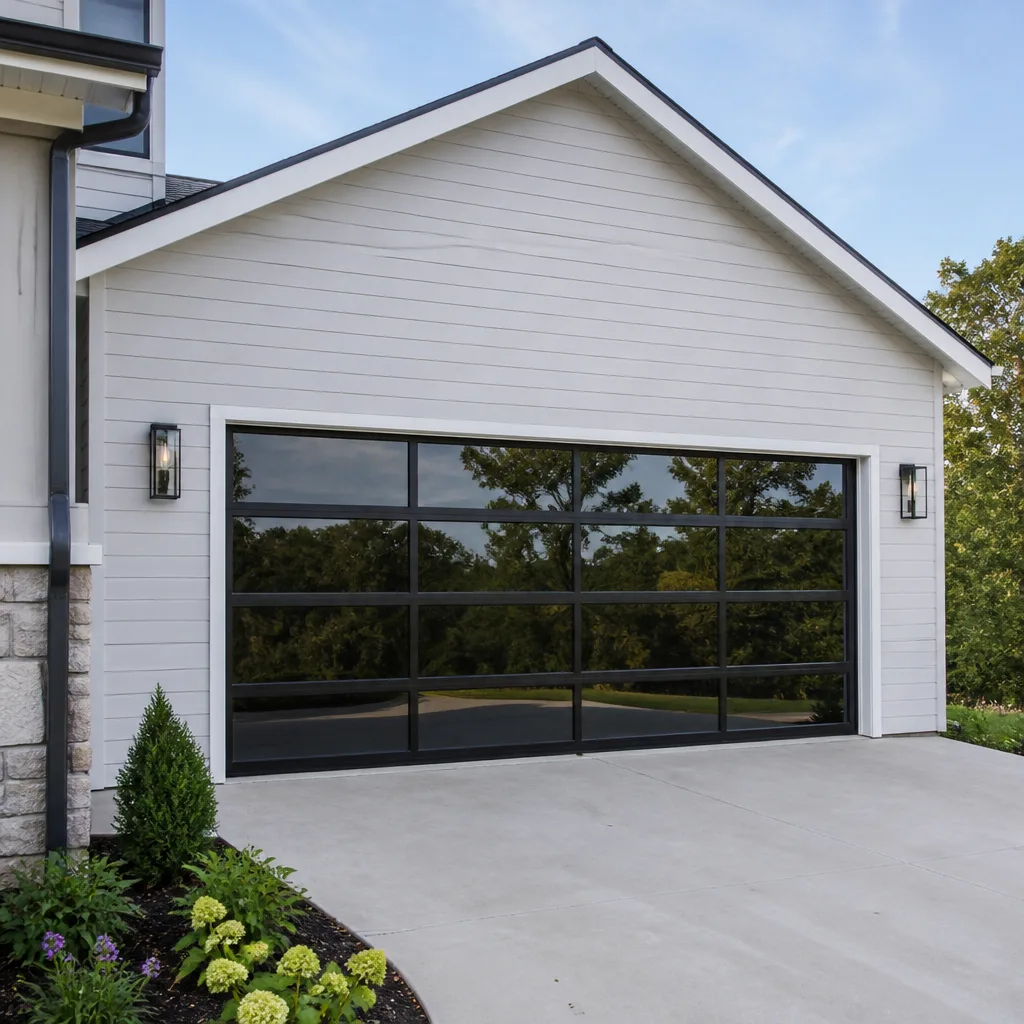 Full-view glass
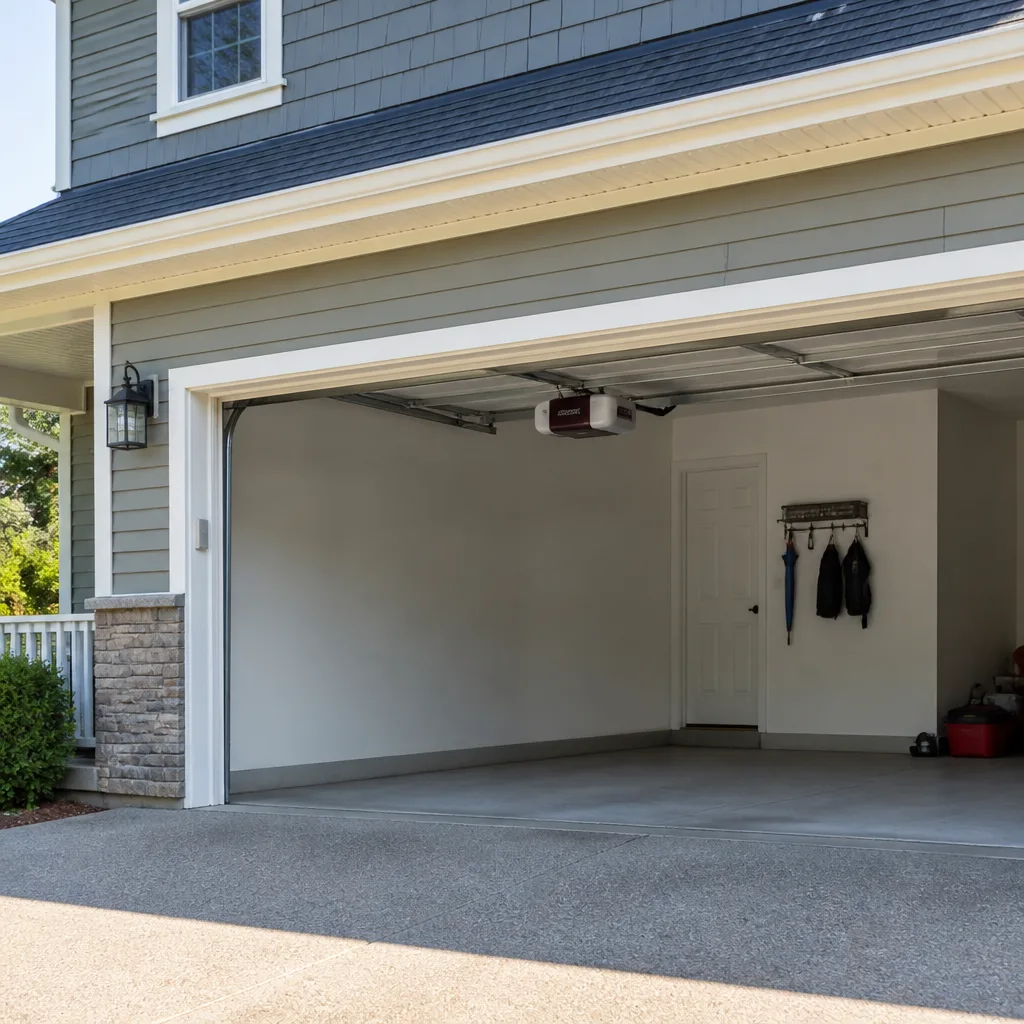 LiftMaster openers
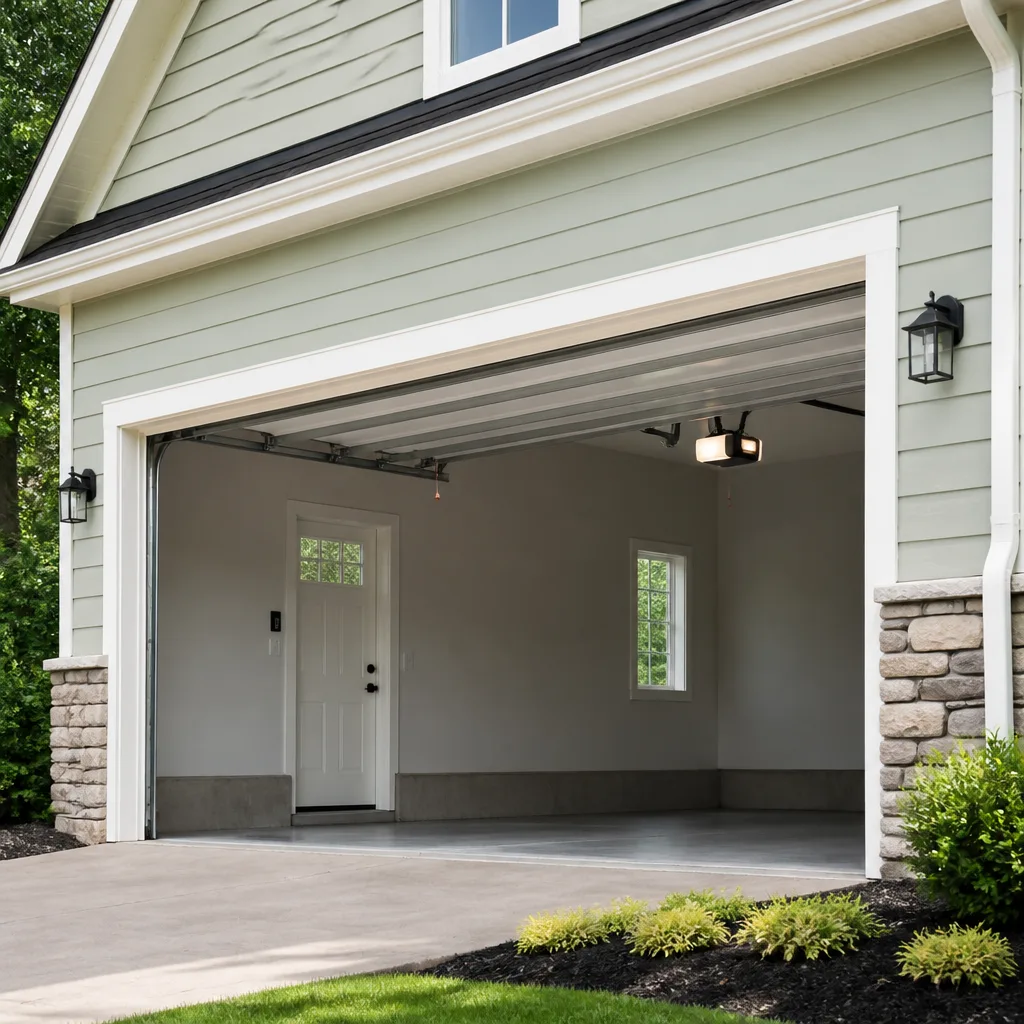 Chamberlain openers
Full 25-point door and opener safety check with every visit - springs, cables, rollers, tracks, and your LiftMaster or Chamberlain opener included
You get a price before we start. It does not change when the pro arrives.
Get your free estimateDIY vs Professional Garage Door: The Tacony Homeowner’s Decision Guide
A torsion spring stores roughly 100 foot-pounds of torque. It doesn’t care how many tutorials you’ve watched, how many tools you own, or how many weekends you’ve spent fixing things around the house. Mechanical energy of that scale sits coiled inches above your head, under tension every second of the day, and it releases without warning when a fastener slips or a winding bar jumps. That’s the real dividing line in this debate. The question isn’t whether you’re capable. It’s whether the risk-reward math makes sense for the specific task in front of you. In this guide we’ll separate the jobs a careful Tacony homeowner can genuinely handle from the jobs that belong to a trained technician, walk through the real cost picture, and give you a clear decision path instead of a hedge.
Quick Answer
The safest split is simple: sensor cleaning, lubrication, track wiping, and minor hardware tightening are reasonable owner tasks, while torsion and extension springs, cables, drums, and bottom brackets are stored-energy components that can cause serious injury and should go to a trained technician. For the dangerous jobs, choose a specialist who quotes the price in writing before any work begins, because the components fail with force that no amount of caution reliably controls.
Styles & brands we work with
- Raised-panel steel
- Carriage house
- Modern flush
- Full-view glass
- LiftMaster openers
- Chamberlain openers
Table of Contents
- What “Stored Energy” Actually Means on a Garage Door
- The Definitive DIY Task List for Tacony Homeowners
- The Jobs That Never Belong to the Homeowner
- DIY vs Professional: The Real Cost Comparison
- How Smart Openers Changed the DIY Calculus
- The Liability Angle on a DIY Spring Job
- Your Decision Flow: Task, Door Age, and Comfort Level
- Tacony Doors: Weather, Rowhouses, and Tight Garages
What “Stored Energy” Actually Means on a Garage Door
Every sectional garage door is balanced by springs that carry the door’s full weight, and those springs hold energy at all times, even when the door is closed. A torsion spring works through rotation across a shaft above the door. An extension spring stretches along the track. Both exist to do one job: make a heavy door feel like it weighs almost nothing, which is why you can lift a door with one hand. That convenience is the whole point of the spring system, and it is also the reason spring work is treated differently from every other repair in the trade.
When a spring breaks, nothing dramatic has to happen first. Metal fatigues over thousands of cycles, and at some point a coil gives. The release is sudden, and the door can drop or the cable can go slack in a fraction of a second. For a homeowner on a ladder with a wrench, a relaxed grip is the only thing between them and a moving load of several hundred pounds. That’s what technicians train for: not just how to install the spring, but how to control the energy while they do it.
The same logic applies to cables, drums, and bottom brackets. During a normal door cycle these parts are under load even though they look static. Loosen the wrong bolt and the tension redistributes faster than a person can let go. Which is why, when we look at a Tacony door with a snapped spring or a frayed cable, we treat it as a job with a start, a controlled middle, and a finish, not as a swap of one part for another.
- Torsion spring: wound across a shaft above the door, stores energy through rotation.
- Extension spring: stretches the length of the horizontal track, stores energy through stretch.
- Cables and drum: transfer spring tension to the door and stay loaded through every cycle.
- Bottom brackets: the anchor point where cable tension meets the door frame.
The Definitive DIY Task List for Tacony Homeowners
Plenty of garage door upkeep is genuinely within reach for a competent homeowner, and we’d rather a homeowner knows which jobs are safe than treats the whole door as untouchable. Keeping on top of the simple things extends the life of hinges, rollers, and tracks and prevents a lot of small problems from turning into repairs.
- Test the safety reverse. Place a solid object in the door’s path and confirm the door reverses on contact. This is the single most important owner check, and it takes a minute.
- Wipe the photo-eye lenses. Dust, cobwebs, and grime on the sensor lens cause the majority of “door won’t close” complaints. A clean cloth and a few seconds fix it.
- Lubricate the moving parts. A garage-door-specific lubricant on hinges, rollers, and the torsion shaft bearings quietens a noisy door. Skip the tracks; lubricant on the vertical track attracts grit.
- Tighten visible hardware. Hinges and the bracket bolts that hold the track to the wall loosen over time. Hand-tight with the right size wrench is enough.
- Balance-test the door. Disconnect the opener and lift the door halfway. A balanced door should stay put. If it falls or climbs, the springs are out of adjustment, and that’s a technician job.
- Replace the opener’s remote battery and re-pair a remote. Battery swaps and re-pairing a remote are safe, and they’re the two most common “dead opener” calls that turn out to be nothing.
- Sweep the tracks. Clear leaves, grit, and debris so the rollers run clean.
If a door in Tacony is noisy, sluggish, or stopping halfway, walk through this list first. You may save yourself a service call, and if the problem survives the list, you’ll be able to describe it clearly when you call, which shortens the diagnosis. For anything past this list, our garage door repair team handles the rest, and there’s no shame in stopping at item five.
The Jobs That Never Belong to the Homeowner
The short list is springs, cables, drums, and bottom brackets, and it’s short for one reason: these are the components holding the door’s weight under constant tension. Even with the door fully closed, they’re loaded. Even with the power off, they’re loaded. Even with the door held open by a vise grip, they’re loaded. Do not try to unload them yourself.
Springs are a named specialty of ours, and we’ve seen the aftermath of DIY spring and cable work more often than we’d like. Cables that were reattached without enough tension, springs of the wrong wind direction, bolts left loose under load because “it seemed tight.” The part of the trade that’s difficult isn’t identifying the broken spring; it’s controlling the load while you work, and that comes from training and repetition. It’s why this work is one of the most safety-critical repairs in the garage door trade, and it’s why a professional should do it.
Two other categories deserve a professional. Structural repairs to a door panel or the frame around a rowhouse garage opening, because steel and wood want to be repaired with the right fasteners and reinforcement, not a random bracket. And any diagnosis that requires removing a carrier or lifting a door off its tracks. Those touch the balance of the whole system, and once the balance is disturbed, the springs and cables pick up the difference.
There’s also a myth that a snapped spring is a straightforward swap: measure, buy, install. The trick is the winding. A torsion spring has to be wound to the correct number of turns for the door’s weight, height, and drum size. Guess low and the door is too heavy for the opener; guess high and the door climbs. That calculation, combined with the risk of the winding itself, is why spring repair stays with trained technicians. If you’re not sure whether your problem is a broken spring, a worn opener, or a bind, our garage door opener repair team can diagnose it and tell you which service it actually is before anything is quoted.
DIY vs Professional: The Real Cost Comparison
DIY garage door work looks cheaper on paper because you only see the labor you’re not paying. In practice, the real comparison has to include the cost of parts at retail, the cost of tools you may not own, and the odds that the job comes back. A weekend spring swap that ends in a callback repair is more expensive than the professional job it replaced, and it’s considerably more dangerous.
Here’s how the costs break down in practice for the jobs people most commonly consider.
- Lubrication and sensor cleaning: A can of garage-door lubricant and a rag is the entire cost. This is the most obvious DIY win.
- Hardware tightening: Free if you own the wrench. A safe, sensible owner task.
- Remote battery and re-pairing: The cost of a battery. Safe.
- Spring replacement: The spring itself is one line, but the torsion winding is where the job lives. The professional payout is not for the part but for the controlled handling of stored energy.
- Cable and drum work: Similar logic. The part is inexpensive; the risk of an uncontrolled release is not.
- Opener replacement: This is where the DIY temptation peaks, and it’s also where smart openers have made integration harder (more on that below).
When our technicians quote a repair, the price is set in a written estimate before any work begins. That means you know what the job costs before the tools come out, and for a broken spring or a snapped cable, the professional price is the total cost of the job done safely. There’s no service-call fee, no diagnostic fee, and no surprise line on the invoice. Call (855) 707-5423 for a free estimate. We answer 24/7. Fast dispatch from 7am to 7pm, Sunday through Friday.
The Parts Markup Nobody Tallies
There’s a second layer to the DIY cost picture that rarely makes it into the blog posts: parts markup. A retail spring, cable set, or bottom bracket bought at a home center often costs more than the same part in a professional job, because supply houses sell to the trade and retail shelves don’t. When the homeowner’s part fails early, which happens with off-spec springs and mismatched hardware, the money is simply spent twice. We buy brand-specific parts for the brands we service, from Raynor to LiftMaster, so a replacement is the right spec for the door rather than whatever fits the shelf.
That’s also why a callback repair is the most expensive repair of all. If the door comes back down the line, the homeowner pays for another part, another afternoon, and, if the door was damaged in the meantime, another door. A professional job priced upfront is the one number that avoids the compounding. For installation and replacement, we work the same way: free measure, written price, no pressure. If you’re weighing up a new door rather than a repair, our garage door installation team can walk you through the brands and what fits your opening.
How Smart Openers Changed the DIY Calculus
Not long ago, replacing an opener was a straightforward weekend job for anyone comfortable with tools. Buy a new unit, follow the manual, swap the head, re-set the limits. That’s changed. The openers most homes now use, including LiftMaster and Chamberlain, are smart-home devices wired into the home’s Wi-Fi, the battery backup system, the safety reverse system, and often the control board of an older door. Get the integration wrong and the opener works from the wall switch but not from the app, or the battery backup test fails, or the door reverses on its own, and the homeowner is left with a door that behaves unpredictably.
Here’s where we draw the line for a confident homeowner. A like-for-like replacement of a simple, older opener, with the same type and brand, where the wiring is already correct and the door is balanced, is reasonable DIY territory. A smart opener install on a door that already has a battery backup, a camera, or an integrated control board is where a technician saves hours and heartburn. The good news is that Genie, Chamberlain, and LiftMaster all have clear compatibility paths, and our team works across all of them. If the opener is the only part that failed, replacing it is often simpler and cheaper than replacing the door, and our Garage Door Repair Tacony team can tell you which situation you’re in.
The Liability Angle on a DIY Spring Job
This is the part of the conversation most DIY guides skip. If a homeowner replaces a spring, and later the door fails and someone is hurt, the question of who did the work becomes the question of who is responsible. Homeowner’s insurance covers negligence differently from a professional installation, and a claim can be complicated by the fact that the work was never inspected, never signed off, and never done by a licensed technician. We can’t tell you how your insurer will handle a specific claim; that’s a question for your policy documents and your agent. What we can tell you is that a documented professional repair is easier for everyone to stand behind.
For the dangerous components, a professional repair covers the work and gives you a written record of it. That record matters if the door is ever inspected, or if the question of maintenance history comes up. It matters even more for a rental property, where the landlord is responsible for a working, safe garage door. And it matters for a household with children or pets, because the safety reverse system is only as good as the last person who touched the door. We work on what you already have, which is why we keep parts and training for Raynor, Genie, and Chamberlain systems as well as the rest of the leading brands.
Your Decision Flow: Task, Door Age, and Comfort Level
This is the clear answer the debate deserves. Work through the three questions below, in order, and you’ll know whether the job in front of you belongs to you or to a technician.
- Question one: does the task touch stored energy or the door’s balance? Springs, cables, drums, bottom brackets, and removing a door from its tracks are professional work. Everything else goes to question two.
- Question two: how old is the door and its opener? If the door is older than a decade or the opener is a model you can’t identify, have a technician look before you buy parts. Older doors have specific spring, drum, and cable specs, and a mismatched part can fail early or fail dangerously.
- Question three: how familiar are you with the specific system? If the opener has a control board, a battery backup, or smart-home integration, or you’ve never re-set limits or adjusted a photo eye, the professional route is faster and cheaper in real terms. If you’ve done the same model before and the door is balanced, a like-for-like opener swap is reasonable.
The flowchart answer, plainly: safe owner tasks are sensors, lubrication, hardware, and batteries; anything involving the balance of the door or an unfamiliar opener belongs to a technician. If a task lands in the middle, call and describe it, and we’ll tell you honestly which side it falls on. That’s true for Tacony rowhouses and for the detached garages off the main streets alike. Spring repair is a specialism of ours precisely because most generalists turn it away, and we’d rather spend five minutes on the phone than see a homeowner take a risk.
Tacony Doors: Weather, Rowhouses, and Tight Garages
Tacony’s housing stock gives garage door work a particular flavor. Many of the neighborhood’s rowhouses have a tight rear or side garage opening where the door is framed into the building line, which makes a panel repair or a track adjustment a little more cramped than the out-lot ideal. Tight access is one reason a professional can be quicker on a repair: a cramped crawl space around the tracks is easy to unbalance with a wrench, and a track nudged out of alignment puts stress straight onto the cables and springs.
The local weather matters too. Philadelphia gets cold winters and hot summers, and the temperature swing across a year works on springs, cables, and seals. A spring that’s been in place for years is closer to its fatigue limit in a cold snap, and a door that sticks in shallow cold is often telling you the balance is off before the spring actually breaks. The most useful preventive habit in this climate is a balance test every season: disconnect the opener, lift the door halfway, and see if it stays. If it doesn’t, book it before the cold does the work for you.
Rowhouse garages also raise the security question, and it’s a practical one. A door that won’t close or has a loose panel leaves the home open, and that’s exactly the situation our emergency service exists for. When the door won’t move, we do: we answer 24/7, and we dispatch Sunday through Friday from 7am to 7pm. If a door fails on a Saturday, call and we’ll book it for Sunday. That’s the honest schedule, and it’s why we’re a single-trade specialist: all of our training and parts inventory is concentrated on garage doors, not split across other trades.
See the difference
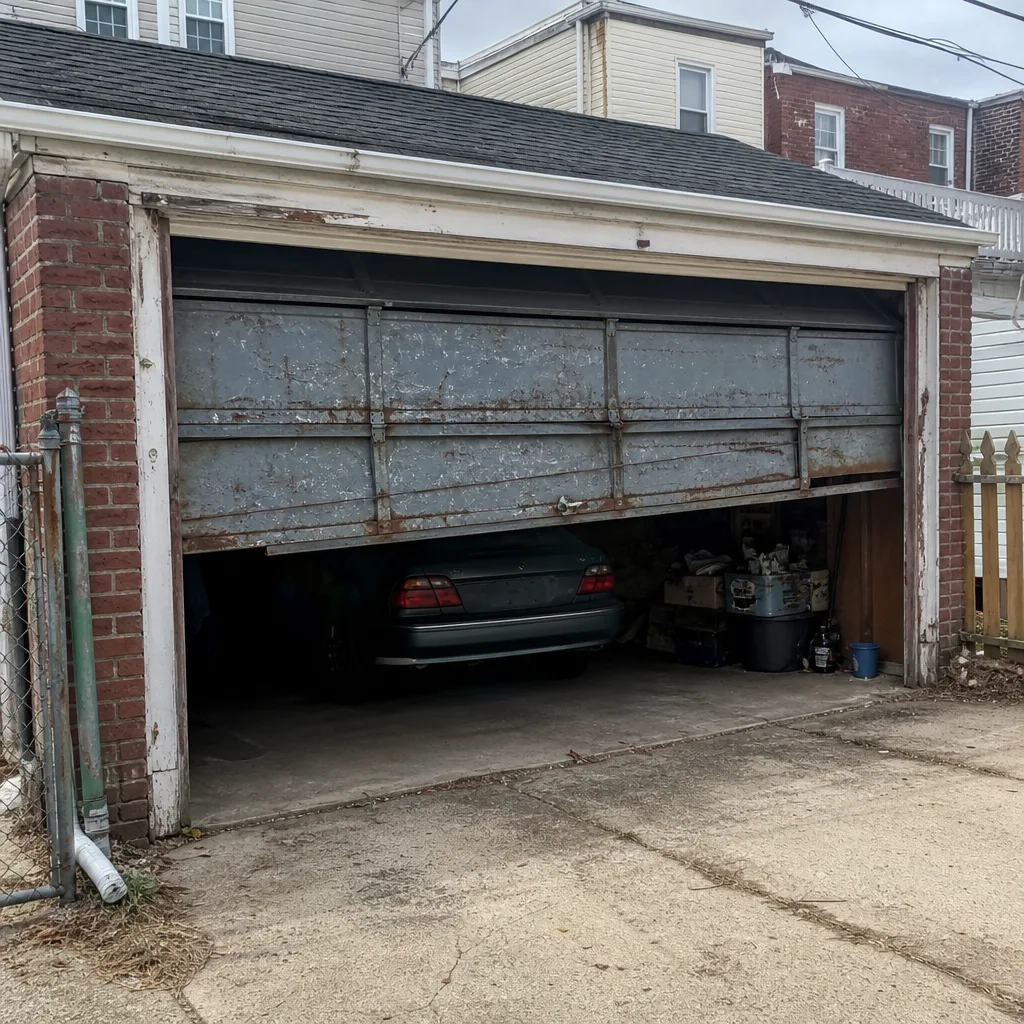 Before
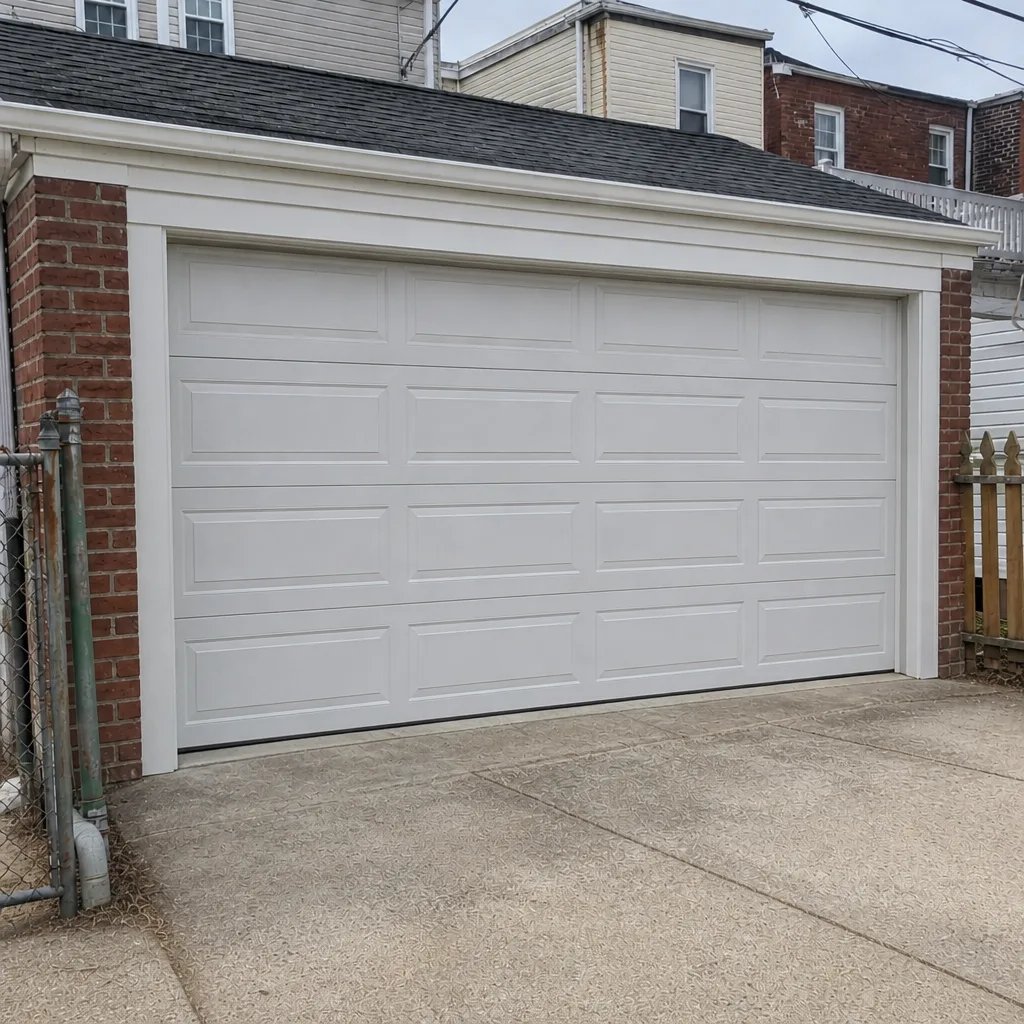 After
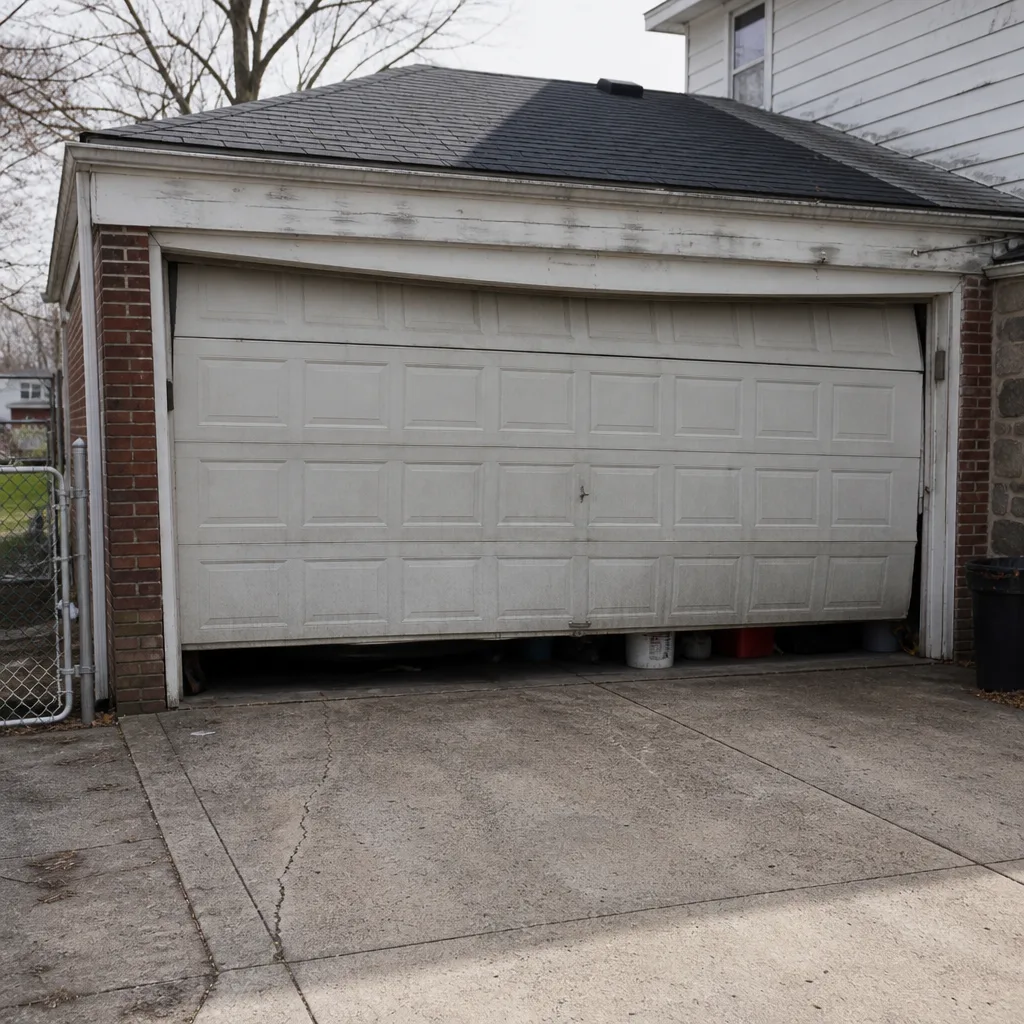 Before
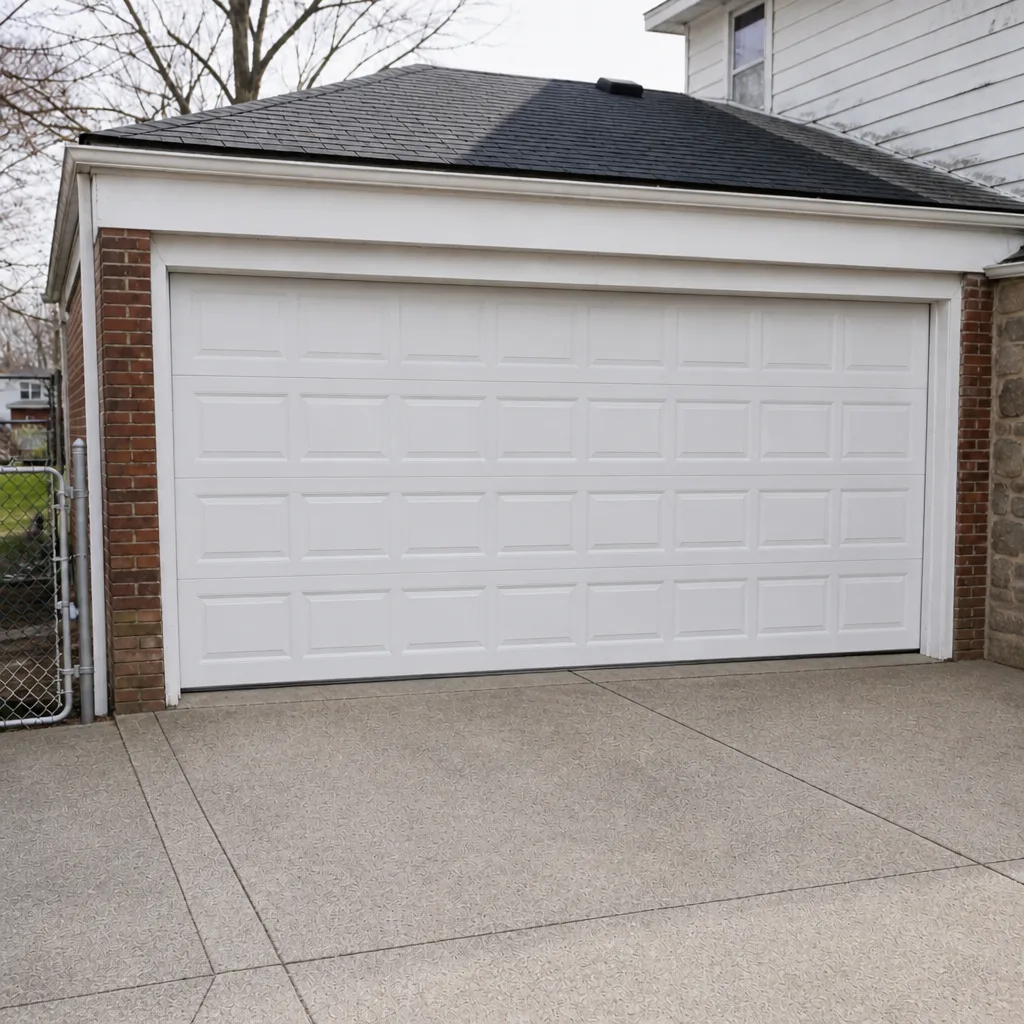 After
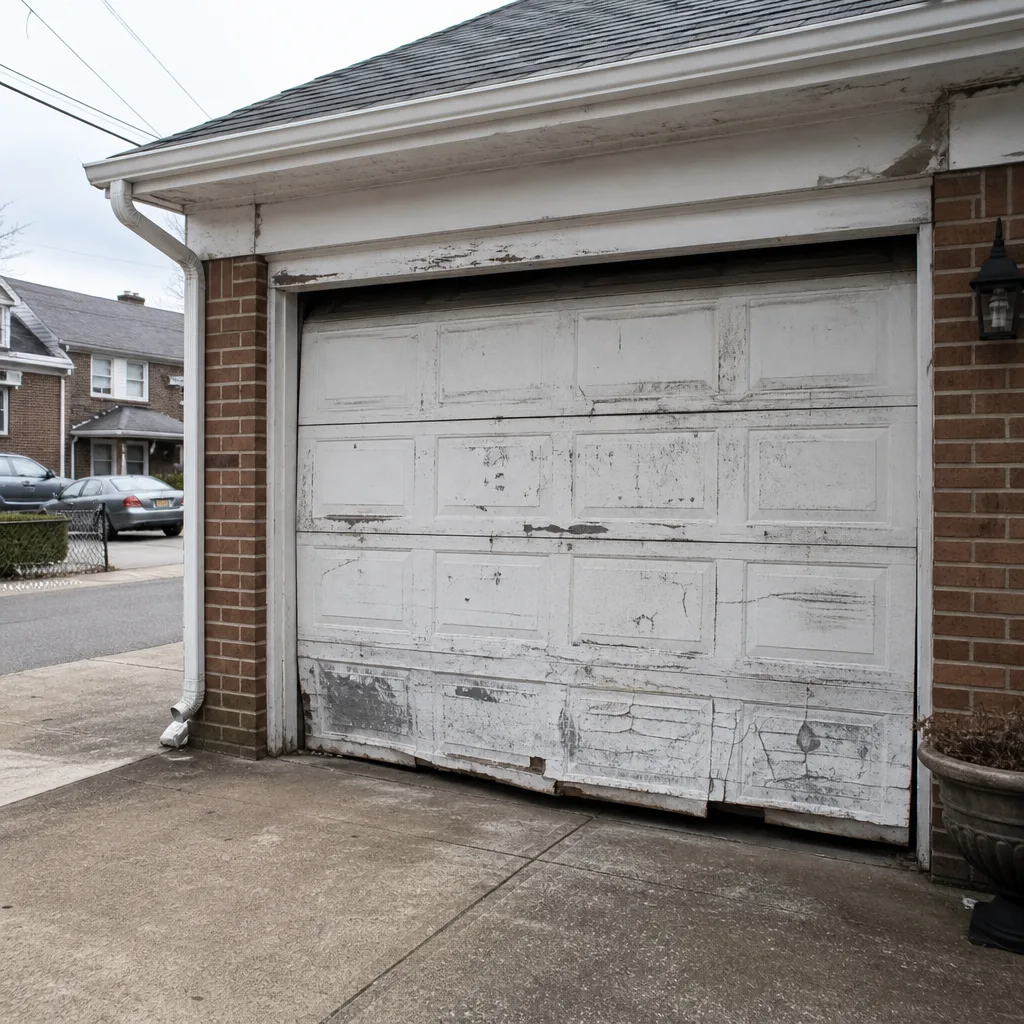 Before
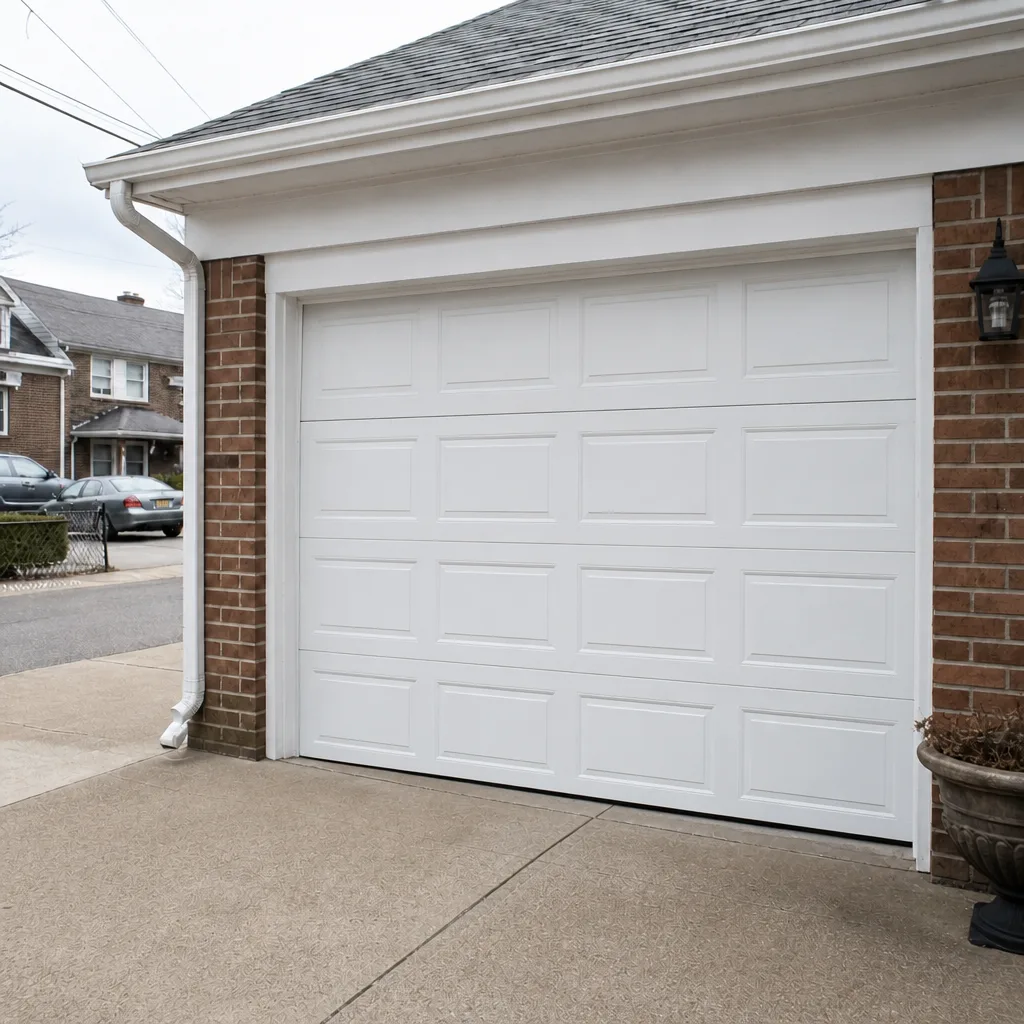 After
Common Mistakes to Avoid
- Buying a spring by eye. Two springs can look identical and carry different wire gauge, wind direction, and length. Buy the wrong spec and the door is unbalanced or the spring fails early. Measure with the door’s paperwork or call us.
- Winding a torsion spring without a winding bar and the right count. The winding is where a spring swap becomes dangerous. A slip on the winding bar releases stored energy instantly, and no amount of caution reliably prevents it.
- Lubricating the vertical tracks. A common piece of advice that makes doors worse, because lubricant on the track holds grit and makes the rollers skid. Lubricate the hinges, rollers, and bearings instead.
- Ignoring a sagging balance test. A door that won’t stay halfway is telling you the springs are out of adjustment. Ignoring it puts the load onto the opener, and openers burn out from unbalanced doors.
- Treating a rowhouse garage like an open lot. In Tacony’s tight garage openings, there’s less room to move around the tracks and the door. If the access is cramped, the professional is the safer call, especially for cable and bottom-bracket work.
- Assuming a new smart opener is a plug-in swap. LiftMaster, Chamberlain, and Genie smart openers need the limits, safety reverse, and battery backup set up correctly. A half-finished install can leave a door that fails the safety reverse test, and that matters in any household with children or pets.
- Skipping the written estimate. Any repair where the price is agreed verbally and the invoice arrives higher leaves you arguing after the fact. Insist on a written estimate before the work starts.
When to Call a Professional
Call us when the door won’t move at all, when a spring is snapped or the cable is slack, when the door is crooked in its tracks or won’t close all the way, or when the opener runs but the door doesn’t. Call if you’ve lost a remote and can’t re-pair it, if the safety reverse doesn’t work, or if the door came down on something and now doesn’t sit right. Call if the door is older than you are and you can’t identify the opener model, or if the garage is a tight Tacony rowhouse opening and the work is anything past lubrication and hardware. Garage Door Repair Tacony offers free estimates in Tacony. Call (855) 707-5423. We answer 24/7, and fast dispatch runs from 7am to 7pm, Sunday through Friday.
Frequently Asked Questions
No, we don’t recommend replacing a torsion or extension spring yourself, because both hold stored energy under load at all times and can release with serious force during the work. The spring itself is inexpensive; the winding and control of the load are the job. A trained technician sets the correct turns for the door’s weight and height, usually in a single visit. Call (855) 707-5423 for a free estimate. We answer 24/7. Fast dispatch from 7am to 7pm, Sunday through Friday.
The price depends on the job: a sensor clean-up or hardware tighten is minor, a spring or cable replacement is a bigger service, and a full installation is a measured, scheduled project. The right number comes from a written estimate before any work begins. Call (855) 707-5423 for an exact quote. Estimates are free.
Sensors, lubrication, minor hardware tightening, track sweeping, and remote batteries are all safe owner tasks. The rule of thumb is: anything that touches spring tension, cables, drums, or the door’s balance is professional work. Everything else on the door is fair game for a careful homeowner with the right tools.
Same-day service is available for time-sensitive failures, and we run fast dispatch from 7am to 7pm, Sunday through Friday. We answer 24/7, so a call outside dispatch hours gets booked into the next opening. If a door fails on a Saturday, we’re closed that day and will book you for Sunday. Call (855) 707-5423 for an exact quote. Estimates are free.
No. The price is quoted and agreed in a written estimate before any work starts, so the written quote is what you pay unless you ask for extra work or a further fault turns up mid-job. For installations, the free measure and written price come first, and the order is placed after you’ve agreed it. Call (855) 707-5423 for a free estimate.
Very likely, yes. We’re certified across eight major garage door and opener brands, including LiftMaster, Chamberlain, Genie, Clopay, Amarr, Wayne Dalton, Craftsman, and Raynor, so the vast majority of residential systems are covered. If you’ve been told a generalist won’t touch your opener, call us with the model number and we’ll confirm. Call (855) 707-5423. We answer 24/7.
The Bottom Line
The DIY vs professional question for garage doors isn’t about capability; it’s about stored energy. Sensors, lubrication, hardware tightening, and batteries are sensible owner tasks, and we’d rather you know them than be afraid of the whole door. Springs, cables, drums, and bottom brackets belong to a trained technician, because the risk isn’t a scratch on a panel, it’s an uncontrolled release of stored energy. The cost comparison only tilts toward DIY on the safe tasks, where the parts are cheap and the risk is low. On the dangerous ones, the written estimate is the whole cost of the job done safely. For everything past lubrication in Tacony, call (855) 707-5423 for a free estimate. We answer 24/7. Fast dispatch from 7am to 7pm, Sunday through Friday. When the door won’t move, we do.
Written by the team at Garage Door Repair Tacony.